A Beginner's Guide to Spotting Octopuses on Night Reef Dives
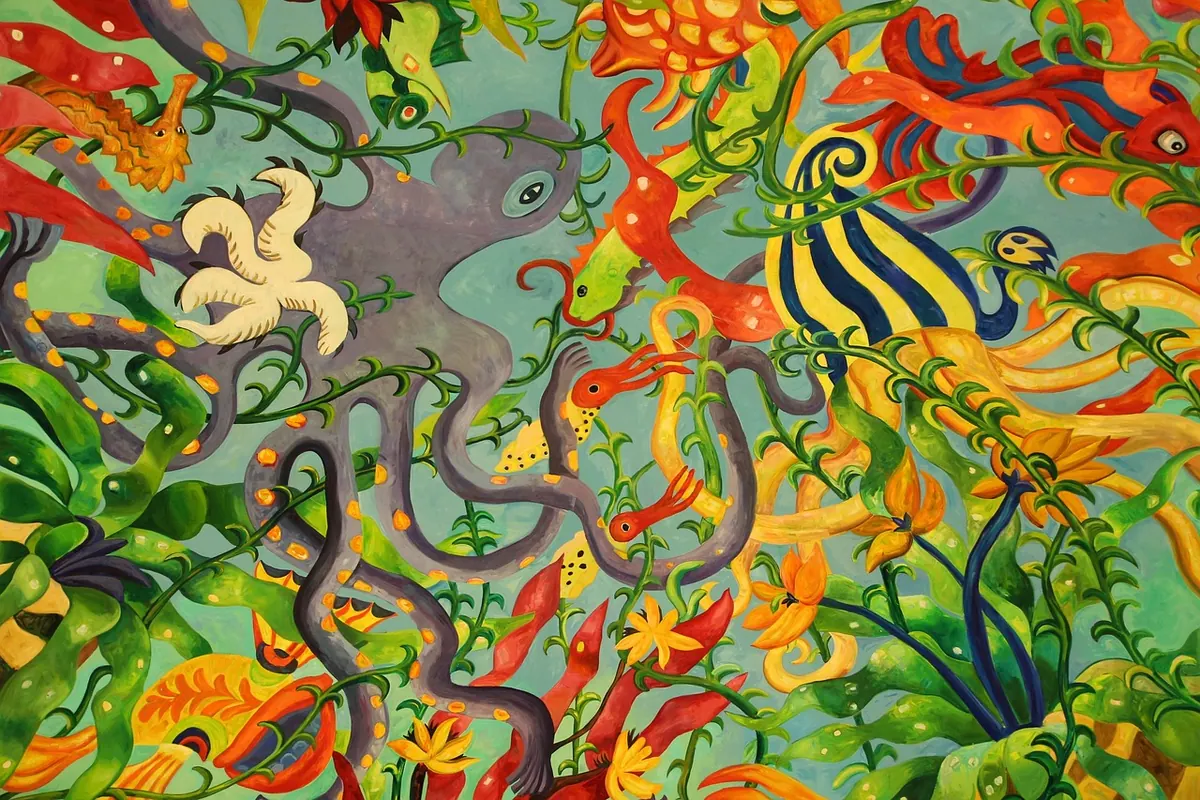
An octopus on a night reef rarely announces itself. You are drifting over sand with your beam half a metre wide when a patch of rock unfolds, changes colour and reaches out an arm. It was sitting there three seconds ago and you looked straight at it.
Night diving is the simplest way to improve your odds of meeting one, because most reef octopuses do their hunting after dark. The difference between a brilliant sighting and a poor one comes down to two things you can control completely: how you use your torch, and where you park your fins.
Why darkness works in your favour
During the day, a reef octopus is usually tucked inside a hole with a lid of rubble pulled over the entrance. It has no reason to come out while the reef is full of fish that would happily eat a small, soft-bodied animal. Once the light drops, that changes. Out it comes to hunt crabs, shrimps and small fish across sand, rubble and seagrass, often covering a surprising amount of ground in a single night.
That is why the same patch of reef that felt like an empty desert on your afternoon dive can be busy an hour after sunset. The animals have not arrived; they have simply stopped hiding.
Worth knowing, though: not every octopus is a night owl. The day octopus hunts on the reef flat in broad daylight, and you may well spot one on a morning dive. Night diving tilts the odds in your favour. It does not guarantee anything.
Where to look on the reef
Random sweeping wastes air and battery. Work the habitat that actually holds octopuses:
- Rubble piles and coral heads with a doorstep. A tidy scatter of empty shells and crab claws outside a hole is a midden, and middens usually belong to someone. Slow down and look at the entrance.
- Edges. The line where sand meets reef, seagrass or mangrove roots is a hunting highway. Octopuses work along it rather than over the middle of a flat.
- Ledges and overhangs. Check the underside using the outer edge of your beam, not the hot centre. You will see more and glare less.
- Anything hollow. Bottles, cans, lengths of pipe and abandoned conch shells all get used as dens. Octopuses are not fussy tenants.
- Eyes. Before you see a body, you often catch two small glints catching the torchlight from inside a crevice. That glint is your cue to stop moving.
Slow down more than you think you need to
Most divers cover a night reef far too quickly. A good rhythm is a few gentle kicks, then a full stop to scan with the light held still. An octopus that is hunting will often carry on as if you are not there, provided you are not thrashing.
Torch etiquette
Your torch is the single biggest factor in whether an animal stays out or vanishes. A few habits matter more than any piece of kit:
- One beam, held steady. Sweeping a torch across the reef like a searchlight spooks everything and reveals less.
- Light the animal, not its eyes. Keep the beam slightly off to one side so it catches the subject rather than blasting directly into it.
- Learn your torch's spill. Most beams have a dimmer outer edge that is perfectly good for watching behaviour at close range.
- Go easy on the strobe. If you are photographing, give the octopus a minute to settle before firing off repeated flashes.
- Signal your buddy with the light. A slow circle on the reef says "come and look" far better than waving.
Red filters are popular on night dives, and plenty of divers swear by them. Treat them as one tool among several rather than a magic trick. A dim, steady white beam used thoughtfully is usually gentler than a bright red one waved around.
The distance that works for both of you
Start at a metre or two and let the octopus set the terms from there. Watch the body, not the clock. If it keeps hunting — reaching into crevices, drifting along the sand — you are probably fine. If it flattens against the rock, darkens, or slips backwards into its den, you are too close. Back off slowly and give it room.
Never block the den entrance. That hole is the animal's only exit, and a cornered octopus has no good options.
Resist the urge to touch, and resist the urge to follow. If it jets away, it has abandoned a hunt because of you, which costs it real energy. If a tentacle reaches out towards your hand, that is curiosity, not an invitation. Hold still and let it decide what happens next.
Reading the signals
Octopuses change colour constantly, and most of it is ordinary communication rather than distress. Still, some signals are worth knowing. Sudden blanching to near-white while pressed flat, rapid darkening, raised bumps across the skin, an arm curled over the head, a visible pulsing at the funnel, or a cloud of ink are all signs to ease back and dim your light. A relaxed octopus is usually a textured, patchy, slightly ragged-looking one that blends into the reef and keeps working.
A simple plan for your first octopus night dive
- Pick a shallow, sheltered site you already know in daylight, so navigation is not a challenge.
- Dive with a buddy. Carry a torch each, plus a backup, and agree your light signals on the surface.
- Stay off the bottom. Hover, trim your fins, and keep your silty kicks away from the areas you are searching.
- Stop every few metres and scan. Movement finds less than patience.
- Approach from the side, low but clear of the coral, and give the animal a route out at all times.
- Limit yourself to a few minutes with any one octopus, then move on.
- Note where you found it. Octopuses reuse good dens, and that mark on your mental map is worth more than any tip.
Finishing the dive well
End your dive with air in reserve and the reef exactly as you found it. Put shells and rubble back where they were, take nothing home, and leave the site quietly so whoever follows you gets the same welcome you did.
Two last things. Night diving is a skill in its own right, so build it up gradually with proper training and dive within your certification and comfort. And if you do take a sting, bite or scrape from anything on the reef, clean it, monitor it and seek medical advice rather than guessing. Most night dives pass without incident. The ones that stay with you are usually the quiet ones, when a patch of coral unfolded and looked back.
Photo: StockSnap / Pixabay